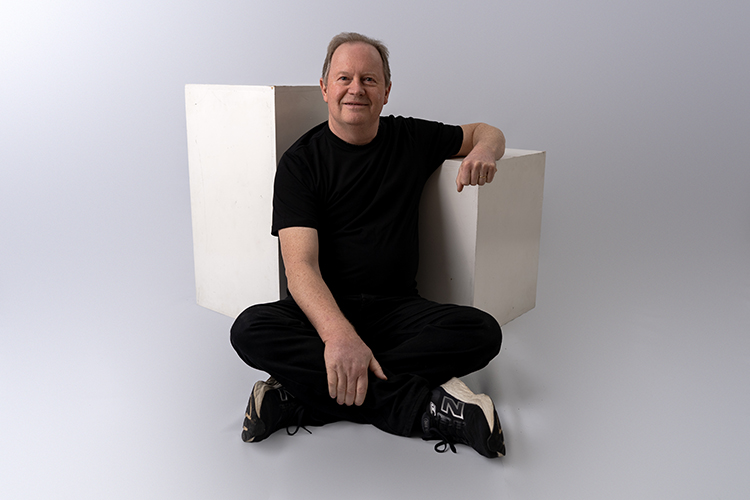
Steve Kelly takes ownership of his breast cancer experience and advocates for greater awareness and support for men facing breast cancer.
Steve Kelly (63) lives in Parktown North, Gauteng, with his wife, Sandy. They have a son, Benjamin (20).
In December 2018, my wife, Sandy, noticed my right nipple was inverted. On further inspection, we felt a lump behind the nipple. It was painless, and I didn’t feel ill.
My GP referred me to a radiologist who examined me with an ultrasound scanner. I was referred for a mammogram and sonogram. A biopsy of the lump was taken. The result showed cancer.
Surgery
The following week, I underwent a right mastectomy and axillary node dissection without reconstruction. Nine lymph nodes were removed; five were found to be cancerous.
The pathology showed Stage 3, Grade 3 breast cancer. The lump was ductal carcinoma, 17mm in diameter, roughly the size of a marble. I was informed that this is a common type and one of the easiest to treat. The standard international treatment protocols apply.
Thankfully, recovery from surgery was good. However, I developed lymphoedema due to the removal of the lymph nodes. For a year, I wore a compression sleeve, and if I use my dominant right arm excessively, the lymphoedema returns and can be painful for weeks.
Treatment
Before starting any systemic treatment, I requested a BRCA gene test. My father died of secondary bone cancer, but the primary cancer was never identified. This is the only history of cancer in my family.
Initially, the medical scheme offered to pay only R600 for the test that costs R12 000. Once the oncologist requested the test, they paid in full. Fortunately, I don’t carry the BRCA gene mutation.
My oncologist explained that Grade 3 plus Stage 3 equals high risk. So, I had six months of chemotherapy, six weeks of radiation (five days a week), and was put on tamoxifen.
I had two chemo ports; the first got blocked after a few months, so I went into surgery during the COVID lockdown to get it replaced. The second port worked flawlessly. In the interim, I had an intravenous infusion. It wasn’t pleasant; the chemotherapy burnt the vein in my left arm.
I recommend a hearty breakfast before chemotherapy. You probably won’t be hungry afterwards. Dress warmly and make use of the blankets and cushions provided.
After chemotherapy, I felt like I had a hangover for at least three days. I spent a lot of time on the couch recovering.
My hair fell out in chunks, which was expected, so I shaved my head. I finished chemotherapy in July 2019, and in no time, my hair grew back stronger than ever.
Radiation
In preparation for radiation, I was marked with three tiny tattoos, one in the centre of my chest, and one on each side.
A set of props was configured so that, together with the tattoos, the radiation therapist could place me in the same position each time.
I was informed that I may develop a slight cough due to the proximity of my right lung to the treatment area. Apart from minor burns and fatigue, I experienced no side effects.
The sessions are short, no more than 30 minutes each, much of which is preparation. However, it’s a hassle to get there every day for six weeks.
I still have the tattoos. The only visible effect is that I no longer have any chest hair on my right breast.
Support in all forms
I’m grateful for the incredible love and support I received from my family, friends, colleagues, and employers.
I had a sickness benefit, which helped to cover the loss of income during treatment. My employers were accommodating during this time, allowing me days off to have treatment.
I’m fortunate to be able to work from home as I’m a software consultant and can work online. Thankfully, my job doesn’t require any physical work.
Creative outlet
Home improvement projects are my creative outlet and have been a vital part of my recovery. This includes electrical, plumbing, and building. Being a practical person, I plan my projects carefully and apply my engineering background. The hardware store is my favourite place to be. I also enjoy writing about technical subjects, such as earth leakage protection and earthing systems.
Remission
My oncologist explained that being in remission means being cancer-free for at least five years. In September 2026, I’ll be cancer-free for seven years. I’ve completely recovered, feel great, and happy to be alive. I still go for six-monthly check-ups.
Exercise in survivorship is important. However, chemotherapy has damaged my heart. This was confirmed by a cardiologist. Therefore, I only do light exercise like walking, swimming, and cycling.
Filotimo Cancer Project Cancer Champion
In 2022, I joined the Filotimo Cancer Project as a Cancer Champion. Writing my story for them was cathartic. I met wonderful, compassionate people: survivors and Filotimo’s partners and ambassadors. Since then, I’ve felt compelled to talk about my experience and have become an advocate for male breast cancer awareness.
I recommend that all cancer patients join a support group; you shouldn’t have to go through this on your own. Of course, there is an obvious downside; we lose members regularly, which is both heartbreaking and tragic.
Breaking down the stigma
Honestly, when I was diagnosed, I wasn’t aware that men can get breast cancer. Initially, this was a shock to me. Even some medical professionals don’t consider breast cancer when examining males.
Men are often not diagnosed correctly and are sent home with antibiotics. Some men even say that people don’t believe them when they say they have breast cancer. Many men acknowledge the humiliation of having to go for a mammogram.
The pink ribbon campaigns have been very effective at raising awareness of breast cancer in women. Unfortunately, the pink ribbon has a distinct feminine connotation, such that breast cancer in men doesn’t come to mind.
Men don’t scan and are generally poor at self-examination. More significantly, research shows that up to 33% of men would not seek medical attention if they found a painless lump in their breast. Because of embarrassment or ignorance, men would often present later with a more advanced breast cancer and a worse prognosis.
Owning the breast cancer experience
As a man, I’m not embarrassed by having had breast cancer. On the contrary, I feel compelled to talk about it. P.S. I don’t miss my right breast.
** Story, courtesy of Buddies For Life Magazine and Laurelle Williams, Editor. Buddies For Life, 1 Jun Steve Kelly – owning the breast cancer experience · Solid Gold Podcasts #BeHeard – iono.fm Owning the breast cancer experience – BUDDIES FOR LIFE MAGAZINE