
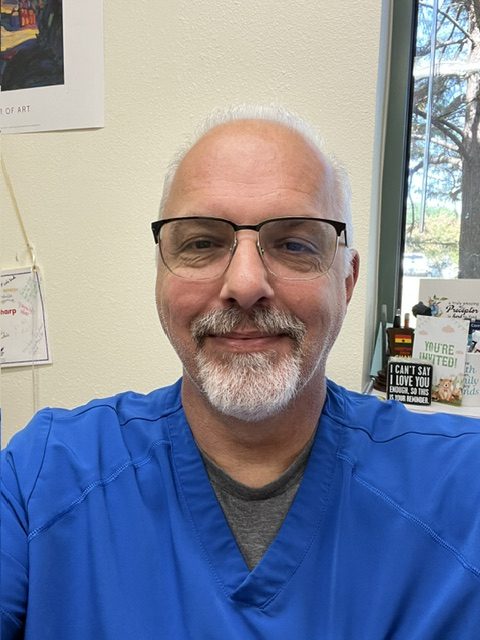
In June 2025, I noticed a small lump in my left chest. At first, I assumed it was just a pimple. Within a week, it had doubled in size and become tender to the touch. I immediately scheduled an appointment with my primary care physician. After examining the lump, he was concerned and ordered further testing.
The results revealed that I had Ductal Carcinoma In Situ (DCIS), a form of breast cancer that is extremely rare in men. My diagnosis was Stage 0, Grade 2. While hearing the word “cancer” was frightening, Stage 0 meant the disease had not spread beyond the milk ducts. We had caught it early, which made all the difference.
I was given two surgical options: a single mastectomy or a double mastectomy, even though there was no evidence of cancer in my right breast. I chose the double mastectomy. After surgery, pathology revealed cancer in the other breast as well. It had simply gone undetected before surgery because it could not be identified without a biopsy. Looking back, I am incredibly grateful I made that decision.
As a man, breast cancer was never something I imagined I could develop. Because less than 1% of all breast cancer diagnoses occur in men, I suspect many men would react the same way I did: first with shock, then disbelief, and ultimately fear. Strangely, I also felt a sense of embarrassment, as though I had been diagnosed with a disease that people assume only affects women.
Had I not acted quickly, my outcome could have been far different. My cancer was growing rapidly, but fortunately it remained localized and had not spread to other parts of my body. I was incredibly fortunate. Each year, approximately 2,500 men are diagnosed with breast cancer in the United States, and an estimated 500 die from the disease. While the risk for men is low, delayed diagnosis can make the disease far more dangerous. Greater awareness is essential.
I consider myself fortunate in another way as well. As a registered nurse, I understood the medical terminology and had a clear understanding of what was happening to me. I also work for an exceptional health system that is ASCO-certified by the American Society of Clinical Oncology, a recognition of its commitment to high-quality, patient-centered cancer care. I was supported by an outstanding team that addressed not only the physical aspects of my diagnosis but the emotional challenges as well.
During my journey, I discovered the Male Breast Cancer Alliance through Facebook and quickly became a member. Through this community, I connected with other men facing the same diagnosis. I found support, understanding, and answers to questions that few people could truly relate to. Today, I am grateful for the opportunity to give back by supporting other men who are just beginning their own breast cancer journey.