”Guys don’t get breast cancer!”
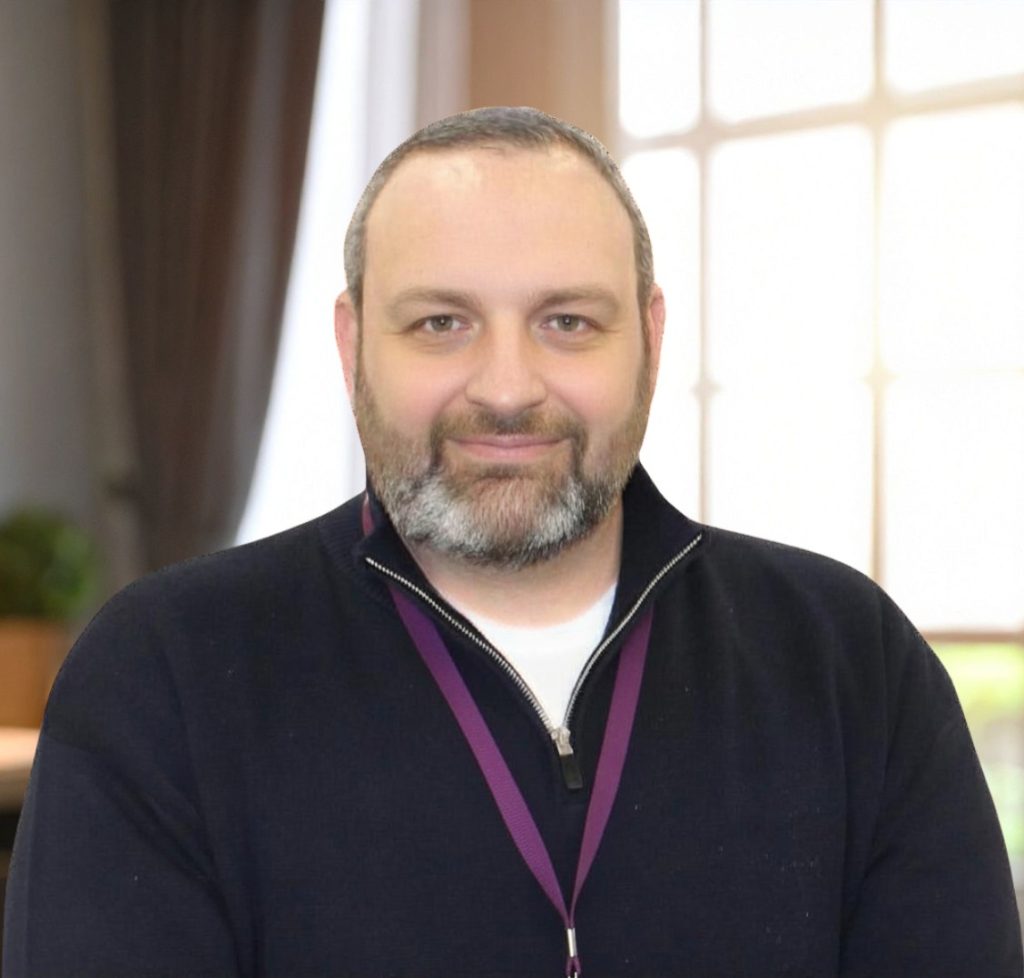
That was exactly what I said to the consultant in March 2025 when she sat me down, put a hand on my knee, and told me I had breast cancer. At 43 years old, I was a former joiner who was now working in the further education sector, and I was sure this was a condition that only affected women. I was wrong. Way wrong!
Looking back, the signs were there as early as the summer of 2024. I noticed a lump on the left side of my chest, and eventually, my nipple started to change shape and crack. Like a lot of men, I just got on with things. I treated the irritation with Sudocrem and didn’t think twice about it.
I hadn’t gone to see my GP in about 15 years. It was only thanks to the persistence of my partner and my stepdaughter that I finally booked an appointment. My doctor knew instantly something was wrong, and a biopsy soon confirmed I was facing stage three breast cancer.
The months that followed were a whirlwind of intensive treatment. In April 2025, I underwent a mastectomy on my left side, followed by 16 weeks of chemotherapy and 15 sessions of radiotherapy. Today, I am in remission, though I still take a cocktail of anti-cancer drugs that I’ll be on for the next five years.
I celebrated the end of my active treatment on 5th November 2025 – Bonfire Night. Instead of ringing the bell in the hospital, my family and I set up a fire in the garden, and I burned every single one of my cancer appointment letters. It was my way of reclaiming my life.
During my treatment, I realized how isolated men can feel with this diagnosis. Only about 1% of the 59,000 people diagnosed with breast cancer each year in the UK are men – roughly 400 of us annually.
Most support services are understandably geared toward women. I remember sitting in sessions surrounded by pink ribbons and brave women, but feeling a deep sense of embarrassment and awkwardness. I desperately wanted to talk to another man who had been through it.
That experience inspired me to launch Male Breast Cancer Support. I’ve trained as a mental health first aider and am completing a counselling course so that when other men call the support line, I can offer them the emotional guidance and the “man-to-man” perspective I wish I’d had.
Support for Men with Breast Cancer | Male Breast Cancer Support