
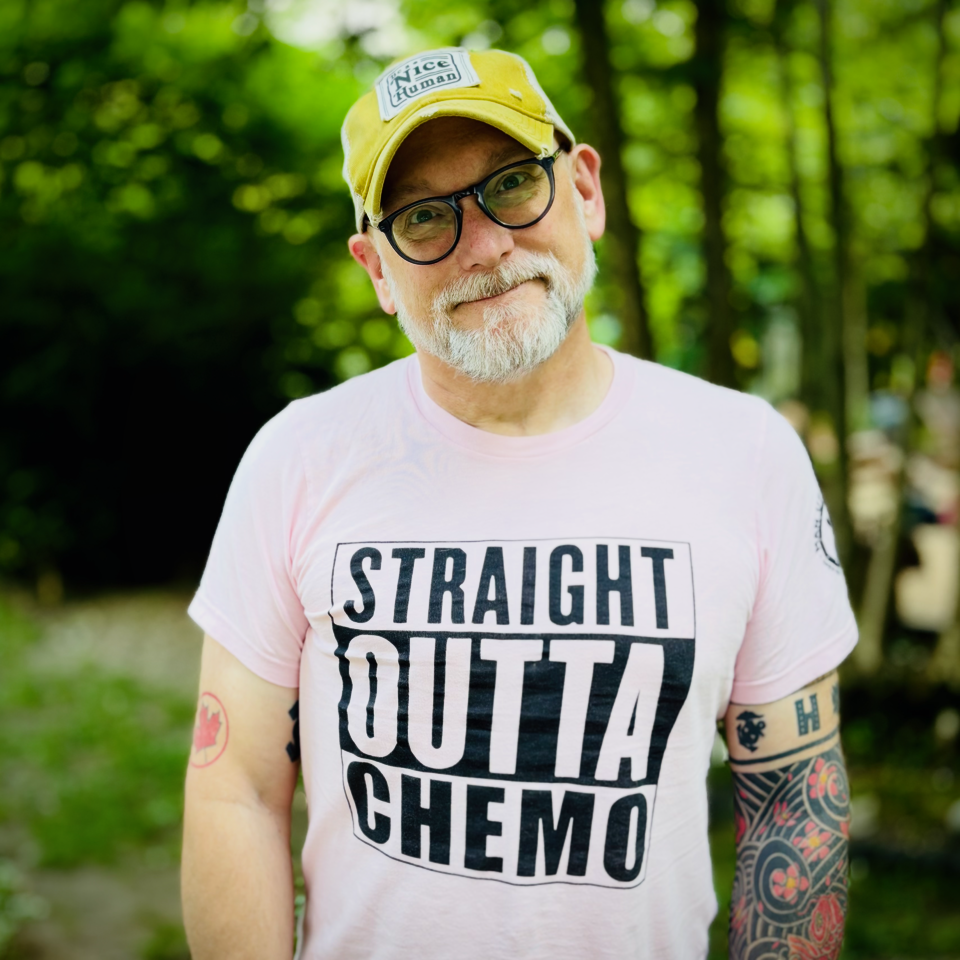
Jake Messier was initially misdiagnosed with stage 2B invasive ductal carcinoma, male breast cancer, in August 2023. A self-described “regular guy from Massachusetts,” his life was upended by a disease he, like most men, never thought would affect him. Now re-diagnosed with Stage 4 metastatic breast cancer, he uses his journey to help others.
His journey began when he discovered a lump in my armpit, which he discounted for about 4 months. Without any family history of breast cancer, he waited a bit as he thought it was a cyst or anything other than cancer.
The confirmation of breast cancer began a grueling treatment regimen that included a unilateral mastectomy, 4 weeks of Doxorubicin, 12 weeks of Taxol, two additional surgeries, and five weeks of radiation. Throughout his treatment, Jake turned to TikTok, creating his account @theguywithstage4breastcancer to document his experience in a raw and honest way—from dealing with surgical drains to the emotional toll of beard loss—amassing a large following of supporters and others affected by breast cancer.
A defining part of his story was the crippling isolation and stigma he faced as a man with a “woman’s disease.” He has spoken powerfully about the profound mental health crisis that accompanied his diagnosis, feeling emasculated and uncomfortable in waiting rooms and support groups where he was often the only man. This lived experience is the fuel behind his advocacy.
Instead of retreating, Jake chose to become a roaring voice for the unheard. He is now a relentless advocate, using his platform to educate millions, normalizing the conversation around male breast cancer, and calling out the systemic neglect and lack of research funding that leaves men behind. His advocacy extends to working with major cancer organizations to push for inclusive language and policy change.
Driven by the stark reality that men are excluded from approximately 65% of breast cancer clinical trials and that dedicated research funding is virtually nonexistent, Jake is launching the Male Breast Cancer Research Foundation (MBCRF). As its Executive Director and a survivor, his mission is personal: to fund the critical research that will create gender-specific treatments and dedicated mental health support for men, ensuring no one else has to fight this disease in the shadows. He lives in Shutesbury, Massachusetts, with his supportive family, Nicole, Jack, Abbigail, Jonny, his three grandchildren, and five dogs.