
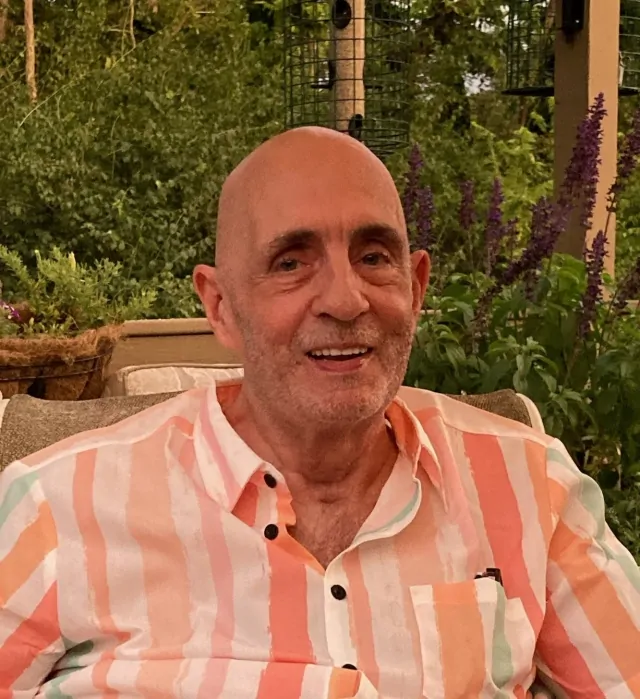
My journey with male breast cancer began in the fall of 2015 at 59 years old.
About a week or so before Thanksgiving, I felt a small lump in my right breast just outside the areola while showering. I didn’t think much about it, but knew I had a scheduled appointment with my primary care doctor on the last day of November.
The doctor’s visit was a routine follow-up for other health issues he was watching. As the appointment was wrapping up, I mentioned my concern about the small lump. He examined it and said it was probably a noncancerous cyst. But to be on the safe side, and since I had oral cancer in 2012 of an unexplained origin, he ordered a mammogram.
I live in Columbus, Ohio, which is home to the Wexner Medical Center at The Ohio State University, with its James Cancer Center, where I was treated for my oral cancer. They also have a top-rated breast cancer center. My mammogram was scheduled for December 9th at the breast cancer clinic. Because of ongoing health issues, I wasn’t too anxious about it, except wondering how they would manage the scan since I am not very developed top side.
At the clinic, I felt a bit overwhelmed by how female-oriented it all was (duh, why not?). I was shown to a small changing room to remove my shirt and given a white robe to wear while I waited for the mammogram. This was a white robe with pink trim. I felt a bit self-conscious sitting in a waiting room with other women in white robes accompanied by their husbands.
The mammogram was as difficult as I thought it would be. Not that painful, but there were lots of pushing and squeezing and manipulations to get acceptable scans. Afterward, I returned to the changing room and changed back into my shirt. I then went back to a different waiting room to wait for someone to come and talk to me about the results. A doctor finally took me to a consultation room and said the results were definitely a small mass of unknown status, and further testing would be required. A needle biopsy was scheduled for December 14th.
I have to admit I was as anxious about the biopsy as I had never had that type of procedure before. Again, back to the clinic, where I met a doctor who would end up being my surgeon. The biopsy went way better than I expected. All to do now was wait for the results. Since I am on MyChart daily, I noticed new test results on the 16th. I indeed had cancer, male breast cancer.
As I mentioned earlier, I have been dealing with multiple health issues for the past 20+ years, so I was accustomed to getting bad news now and then. So mostly I took a deep breath and told myself I can get through this, too.
Later that evening of the 16th, I got a call from my primary care physician. He said he had some bad news for me. Before he could say I had cancer, I told him that I already knew about it. He wanted to see me in his clinic the following day, as soon as I could come in. They would take me without an appointment. I already had a CT scan scheduled at the same facility, so I told him I would come to the clinic as soon as I finished.
On December 21st, I had my first follow-up appointment with the surgical oncologist who did the biopsy. He explained the results very thoroughly and what to expect going forward. There would be no chemotherapy or radiation before surgery, as he felt the lump had been discovered very early. Even so, he was diagnosing it as stage 2, but would be more specific after surgery.
My OPAC and some other pre-surgery things were all scheduled for different dates in January. Surgery, a full mastectomy of my right breast, was scheduled for January 28th with an overnight stay. That was four days before my 60th birthday.
The surgery was pretty much uneventful. Oral cancer surgery had been way worse. I knew I would have drainage tubes, but I didn’t realize how much of an inconvenience they would be. I had four JP drains coming out of my chest that required routine draining and care. Getting around with them was quite a hassle. I saw the surgeon every week for the next month, getting one drain removed each time. After the 4th week, I was scheduled to meet with my medical oncologist on March 4th.
I was used to having a medical oncologist, so nothing unexpected came out of that visit. We discussed my treatment options and scheduled genetic testing to see if I had any defects that might have led to this cancer and possible future concerns. Fast forward to the genetic testing, and nothing was found that predisposed me to breast cancer.
Radiation was ruled out right after surgery as unnecessary. However, chemotherapy wasn’t totally off the books. An Oncotype DX test was sent off to determine if chemo might help going forward. Post surgery, I only had one lymph node of 11 excised that showed a small spot of cancer. The rest were all clear, and the margins from the lump were also clear.
The results of the Oncotype test came back with only a 2-point difference between doing chemo or not. Two percent didn’t seem enough to me to put myself through the rigors of chemo. So I opted not to do chemo.
My initial treatment was daily Anastrozole with a Zolodex booster shot every 3 months. I couldn’t take Tamoxifen because of the potential risk of blood clots. Also, tamoxifen has a major interaction with Coumadin, which I was taking. By the time of the 2nd Zolodex injection, I was complaining about how I was feeling on the anastrozole, but I agreed to go another 3 months. When it came time for the 3rd shot, I told my oncologist I would rather take my chances without treatment than continue living how I was feeling with it. She agreed and reached out to my vascular team to see what could be done. Eventually, they switched me from Coumadin to a different blood thinner, and I started tamoxifen.
I have been on tamoxifen since September 2016. I can’t say I have had any side effects from it other than killing my hormones, which is what it does. I have been getting annual left mammograms since my surgery. I saw my surgical oncologist up until 2024. I will continue to see my medical oncologist annually going forward for now. And I will have one last mammogram in 2026 and stop tamoxifen later that year.
Today, I am 69 years old and living my life to the fullest. In the years since I was diagnosed with male breast cancer, I have made a concerted effort to spread awareness of this condition. I routinely post self-exam instructions and push awareness through my online presence.