
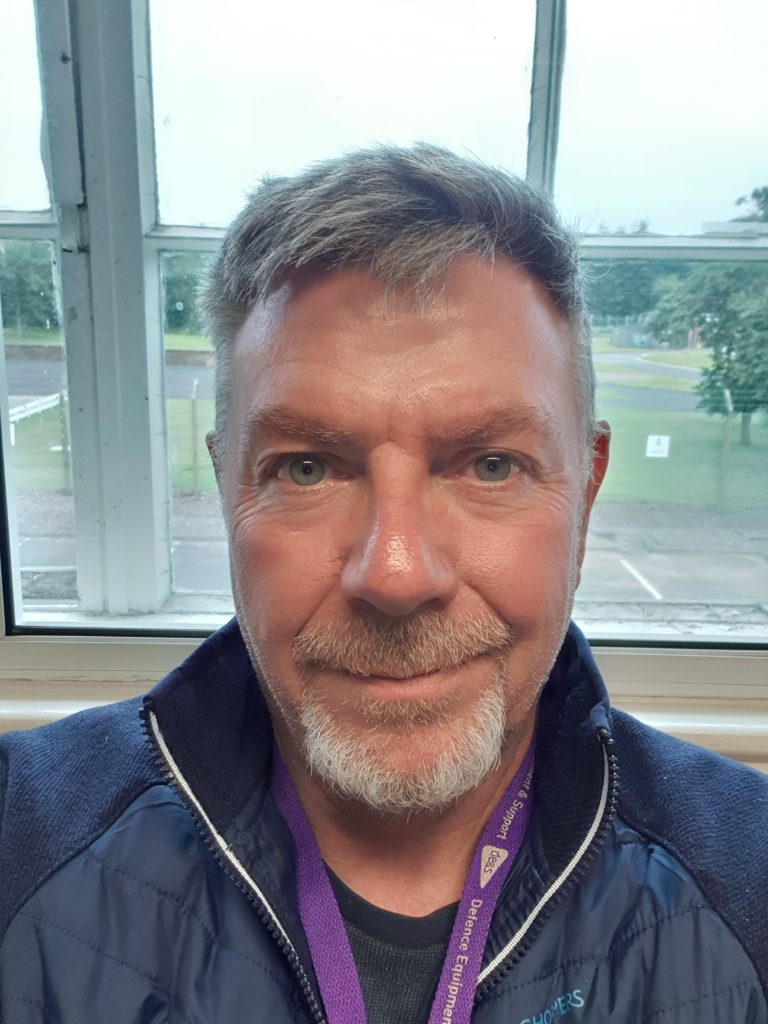
In June of 2005, I was 41 years old when I was diagnosed with Breast Cancer. I was showering one morning and discovered a pea-sized lump in my left breast; I thought nothing of it. It didn’t hurt and seemed to be mobile in the tissue. To me, it could have been nothing more than a sporting injury or, at worst, a cyst. But from the time of discovery, it took me over a month to decide that it wasn’t right. I would have expected it to diminish in size, but it didn’t. It didn’t get any bigger, but it needed to be checked out, so I made an appointment with my GP.
My GP confirmed my theory but still recommended that a specialist investigate further because we can’t see what it is and can only imagine. It was round and mobile, both of which alleviated the suspicion of anything sinister, and an appointment was made for me at the Breast Clinic, where I was subjected to a mammogram, thin needle aspiration, and an ultrasound scan. The results confirmed that this was a solid lump and not the cyst we had hoped for. A further appointment was made to take a wide needle sample (biopsy). A week later, I had an appointment with the Breast Specialist Consultant to get the results.
My wife and I sat in an examination room awaiting the specialist, and still I believed that it was nothing sinister. Then the door opened, and the specialist came in, accompanied by two smartly dressed ladies; my heart sank. Why, if there is nothing wrong, are there Macmillan Nurses here? I was in complete denial, then the specialist uttered the words….” I’m sorry to tell you that…” And I switched off – complete shock – instantaneous and consuming. I looked at my wife, who sat there with tears in her eyes…I looked at the specialist, “The good news is that we have caught this early, and there is a good chance we can sort this out with surgery. You have probably had this tumor for about 5 or 6 years!” And I caught it early. With that, the specialist left the Breast Cancer Nurses to do their job. “Are you alright? Do you have any questions?” “Yes, plenty,” I was thinking to myself, “I told them that I was in complete shock, and could they give me 5 minutes with my wife?” We said little, just cuddled and comforted each other, and then my wife said, “Just get it all cut out, get rid of it, whatever it takes.” It was then that it dawned on me – “Shit! I could die; I’ve got cancer.”
The Breast Care Nurses handed me lots of information to read and ingest to help me understand the situation, something I couldn’t do at that time. They did apologize for the feminine slant of all the literature, but at the time, I didn’t care. All I could think about was how I was going to tell my two young daughters, they must know and soon.
That evening, I still hadn’t shown any emotion (it’s a man thing, be strong for the family), still in shock, contemplating the consequences. We sat down in the living room, and I told my daughters that I had cancer. They accepted it without a tear. I explained everything I knew about my condition and Breast Cancer in general. I was completely taken aback by their “matter-of-factness” and grateful that they saw this as a winnable situation. My family has all been rocks throughout, yet I was not oblivious to the emotional roller-coaster they were getting on board.
Surgical options were given to me, but on further investigation of the biopsy, it was discovered that I had quite a lot of Ductal Carcinoma in-Situ (DCIS) in the surrounding tissue, and the decision was taken out of my hands. I had to have a full mastectomy (“whatever it takes”). DCIS cells are cells that exhibit cancer-causing tendencies. Any one of them could have developed into a tumor given the right conditions. So that was that – I was going to have all the breast tissue, my nipple, and many lymph nodes removed – in two weeks! The lymph nodes provide the drainage system in the body. A sample was removed from under the armpit in Breast Cancer cases to investigate whether any cell migration could have taken place and transferred the cancer elsewhere in the body.
Surgery happened. Two weeks later, my wife and I had an appointment to get the results from the Breast Specialist Surgeon and the ever-present and supportive Breast Care Nurses. It was two weeks of hell – emotions running amok throughout the family, yet I felt calm and tried to reassure everyone that it was going to be alright. I would accept any treatment to make sure that this was dealt with in any way possible. It’s a matter of self-preservation, bring it on – chemotherapy, radiotherapy, drugs, I felt ready to accept whatever happens next. Nothing was under my control, and I didn’t like that, but these people are the experts – they’ve seen and done it all before.
The news was the best I could have hoped for. The surgical results revealed two tumors, and completely removed any trace of breast tissue from my chest. 16 out of 24 lymph nodes had been removed, and there was no sign of migration; I was in the clear. Preventative measures had to be taken, though, to make sure there would be no recurrence, and that involved Radiotherapy and endocrine drug therapy for 5 years. My cancer was found to be estrogen-receptive, which means it requires estrogen to form, and the drug therapy suppresses estrogen production.
In November 2005, I had my radiotherapy. Fifteen treatments, one a day for three weeks, to the chest area where my left breast used to be. The nine-inch scar across my chest was healing well, but now sunburnt as a result of the radiotherapy. I still feel incomplete. There is no symmetry to my chest now. There is no nipple on the left. I’m completely flat on one side, but this is something I can deal with, whether through reconstruction or further surgery to remove the right breast. This is my decision and one I have yet to take, but emotionally I don’t feel ready to do so.
It was a difficult time, but it was a time made easier because I had caught it early.
Ever since the Breast Cancer journey started, I had felt I was on a bus. The destination is a little uncertain, and you don’t know when to get off. There are so many things to consider. Sending your cancer to the lab can tell you all sorts of things, but it can never tell you what caused the cancer in the first place.
During consultation, you are asked about your family history and if there is any occurrence of similar cancers in your bloodline, for example, Ovarian, Cervical, and Breast Cancer in women or Testicular, Prostate, and Breast Cancer in male relatives. The reason for this is that a modified gene is known to be prevalent in a high percentage of cases. The BRCA 1(BReast CAncer Type 1) and BRCA 2(Type 2) genes are hereditary and, in simple terms, produce proteins to help repair damaged DNA. Mutations of these genes can, rather than repair DNA the way it should be, get the formula wrong and cause abnormal growths, in other words, Cancer.
Fortunately, a simple blood test can give the answer, and the obvious choice for me, with two daughters, I was always going to have the test. I could not live with myself if I thought that I could pass this on to my daughters, and to my relief, my genetic results were negative.
In 2007, I decided to have my right breast removed, as it was showing signs of DCIS, and I didn’t want to risk the cancer returning. It made me feel more balanced. It seemed weird to me to have one nipple and “moob” (Man Boob) on one side and a completely flat chest on the other. The scar from the original surgery had healed well, so the removal of the right breast restored balance, symmetry, and more body confidence.
The surgery happened, and I returned to “normal” life and soon discovered that the only person who was conscious of my body image was me. No one gave my chest a second glance, not even when topless on beach holidays or around the pool.
One thing that I was not getting on with was the endocrine drug therapy. A drug called Tamoxifen. I was suffering from hot flushes and joint pain so badly that it was debilitating. Some days I couldn’t stand or even put my shoes on, and when you have a young family, that’s not a good situation. I needed to consult with my Oncologist. Fortunately, he agreed that as the drug was precautionary, I could stop taking it, and within two weeks, all side effects had disappeared, and my quality of life was restored.
The bus pulled up and stopped. This sometimes happens when the bus is running ahead of time, or it has reached its destination. The latter was my thought, when, in 2010, I was discharged as a cancer patient, no longer a government statistic, cancer-free and healthy to get on with life with all the usual trials and tribulations that it has to offer. How did I feel about it at this time? I felt “lucky”. The decisions taken by the medical team, the cancer nurses, and I had gotten me this far, and I felt great. Celebration time, I’ve beaten the big C, think I’ll have a beer!
The Bus set off again. It is now 2024, 19 years since my original diagnosis, and that cursed Bus started rolling again.
I was enjoying a round of golf on a fantastic sunny Saturday morning in August 2023, and my back started to ache so bad I had to stop playing. “Getting old,” I thought pulled another muscle, might need to get some physio on that”.
Cancer was the furthest thing from my mind, and why shouldn’t it be? I was discharged right(?) I don’t have cancer anymore.
The backache came and went repeatedly, and I managed the pain with paracetamol and Ibuprofen as required. I needed to play golf, get out in the hills and walk, ride my motorbike, and a little pain isn’t going to stop me.
October 2023 – Sciatica! I was in absolute agony, I couldn’t put my shoes on, barely dress myself, never mind getting out of bed or a chair. Time to act, thankfully, the “sciatica” subsided after a few days, and I was on my feet again. Still hobbling, but I was mobile and life continued, the action I decided to take just didn’t happen, and I waited until the next attack.
I went to make an appointment with a physio but ended up making an appointment with an osteopath. My first appointment went well, a few stretches, manipulations, and massages, and I felt much better. I went to a second appointment, and the osteopath remarked upon my back being tight, so on the therapy bed, face down, I went, and manipulation commenced. I remember the resounding crack as air was being released from between the joints, he explained, and a lesser crack at the second manipulation. Did I feel better? No, not really. I stood up, thanked him, and went and paid for the session. Thought nothing of it, but decided Osteopathic treatment was not what I wanted.
Two weeks later, Christmas 2023, I could hardly move, rolled off the bed, ending up on all four, grimacing and breathing rapidly to try and control the pain. Couldn’t stand, crawled to the toilet, forced myself to get dressed, and sought some stronger painkillers. In between Christmas and New Year, I thought, no way will I get to see the GP. I still thought this was nerve pain, so I decided not to bother A&E, so the walk-in center it was.
The bus took me to the walk-in center, which couldn’t prescribe anything stronger than paracetamol ?! Wasted time, but I was feeling a bit better despite standing for 4 hours, so I went home. 2nd of Jan 2024 in excruciating pain again, tried to call the GP for an appointment, rang 17 times without getting through, so I called 111. Next thing I know, an ambulance is parked in front of “the Bus” and I was hooked up to an ECG machine, as suspected, an Aortic Aneurysm. Thankfully, I had a heart (still), and an Aneurysm was not the problem. The Paramedics called my GP, got through for the first time(doh), and asked that they prescribe some pain relief and a follow-up appointment. Here I go again, I’m in the system again, but for what was thought to be Osteoporosis.
To cut a long story short, the Bus changed down a gear because it was going uphill. An X-ray discovered I had a broken back. My T8 vertebrae were fractured and had suffered collapse. Was it the Osteopath? maybe. My GP put two and two together and referred me for a Magnetic Resonance Imaging (MRI) scan.
The Bus missed a gear: When I got a call from the GP to come in urgently, I knew then, cancer hadn’t been mentioned, but when I got that call, I knew what it was before I was even told. I’m so sorry, Mr. Place…. “No need to apologize,” I said, “tell me everything.”
I can’t help but feel sorry for doctors who must give bad news, so I tried to put her at ease with my ‘matter of fact’ approach and find out what was known, and as I expected, the Bus had hit a pothole and made an unscheduled stop. The GP couldn’t tell me much, other than I had a broken back and cancer in my spine.
I know now the MRI was to specifically look for the spread of cancer cells from the place where they first formed to another part of the body (Metastasis). I was swiftly referred to an Oncologist. A frank conversation with the Registrar, then the senior Oncologist, gave me more information: The MRI showed that I had Metastatic Bone Cancer down my spinal column, in my pelvis, and liver. I used a word that he doesn’t like, “riddled”, but he couldn’t deny it. I wasn’t shocked, I was relieved. I knew what the fight was about, and I needed to understand it, to know your enemy. A Biopsy proved the cancer was of the same makeup as my original Breast Cancer, so essentially these are secondary cancers, and my diagnosis is Metaplastic Breast Cancer, in other words, developed from the original.
I’m not going to lie, I have had some down moments, got emotional, but you have to stay positive.
It’s now May 2024, and it is early in my treatment. Some of the drugs have side effects, and they can be difficult to cope with at times, but largely they have improved my quality of life, restored mobility, and enabled me to get on with stuff, and that is important.
If I had known that I was going to get 20 plus years after being diagnosed, I would have been happy. Here I am, and I have every reason to believe that the bus hasn’t finished its journey.
Several other Men have been through exactly what I have and more, who are equally trying to increase awareness about Breast Cancer in Men. They are good souls, and if you require any further information, it is there to be had.
When weighed against the number of female sufferers, breast cancer in men is rare, but it happens, and I am proof of that. Over 55,000 women will be diagnosed in any given year, compared to fewer than 400 men in the UK, 1% of all Breast Cancer cases worldwide. What is significant is that nearly 40% of men die within 5 years of diagnosis.
Why is that? Because they don’t know – they are ignorant of the possibility of contracting this disease in the first place.
Don’t die of ignorance. This is a genderless disease; check yourself, and if you find anything suspicious, get it checked out straight away.